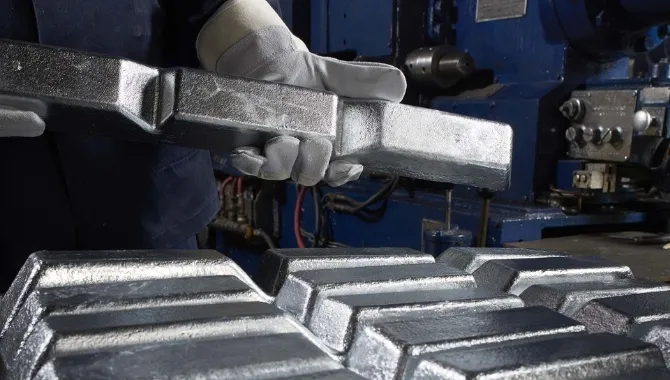
Question: Under what circumstances is pure zinc used as a material instead of an alloy?
First, engineers use pure zinc for sacrificial anodic protection. Corrosion prevention becomes the main goal in these special cases.
Pure zinc shows strong electrochemical activity. People often use it in corrosion-resistant parts and outdoor metal protection structures. It corrodes first and protects the base material from damage.
Second, pure zinc works well in high-purity applications. It suits electronic shielding, chemical experiments, and special metal reaction environments. Its single-component structure makes it a reliable and controllable material.
As a single-component metal, pure zinc remains relatively soft and offers lower strength. This trait proves acceptable for simple stampings, non-load-bearing structures, and disposable or low-durability electroplated products.
For special surface treatment needs, pure zinc fits better in specific scenarios: targeted electroplating reactions and chemical treatment processes.
In the field of high-end perfume bottle cap customization, the choice of zinc alloy raw materials directly determines the product’s texture, durability, and production feasibility.
With perfume packaging constantly evolving, material selection has become a key factor influencing product quality and brand positioning. Many brands struggle with the question of “pure zinc or zinc alloy” when developing perfume bottle caps. In fact, from an industry application perspective, the usage scenarios for these two materials are very clearly distinct.
Pure zinc offers excellent corrosion resistance and chemical stability, so people mainly apply it in functional fields like protective coatings and special industrial environments. It focuses on protective performance instead of structural strength. Pure zinc shows low strength, deforms easily, and resists forming into complex shapes. It cannot satisfy perfume bottle caps that demand premium appearance and high precision.
In contrast, zinc alloy materials (such as Zamac), by incorporating elements such as aluminum and magnesium, significantly improve the material’s strength and stability, while also possessing excellent die-casting properties. This not only enables complex curved surfaces and intricate embossing, but also allows for the creation of highly sophisticated metallic textures through electroplating and spraying processes, satisfying the dual demands of high-end perfume brands for both visual appeal and tactile quality.
The quality of zinc alloy raw materials directly determines the structural stability and surface finish of the product. High-quality zinc alloys possess excellent fluidity and die-casting properties, ensuring precise forming of complex shapes and delicate embossings, while providing a stable foundation for subsequent electroplating and spraying processes. By strictly controlling the composition and purity of raw materials, Dongguan Guanchengxin (“GCX”), a bottle cap manufacturer, achieves bottle caps with a premium feel and high durability, meeting the stringent quality and detail requirements of high-end bottle cap brands.
In conclusion, in practical applications, pure zinc is more often used as a functional material, while zinc alloys have become the preferred choice for both cosmetic and wine packaging. For brands seeking to create a differentiated and high-end image, choosing zinc alloy materials is not only a technological necessity but also a crucial step in enhancing product value.