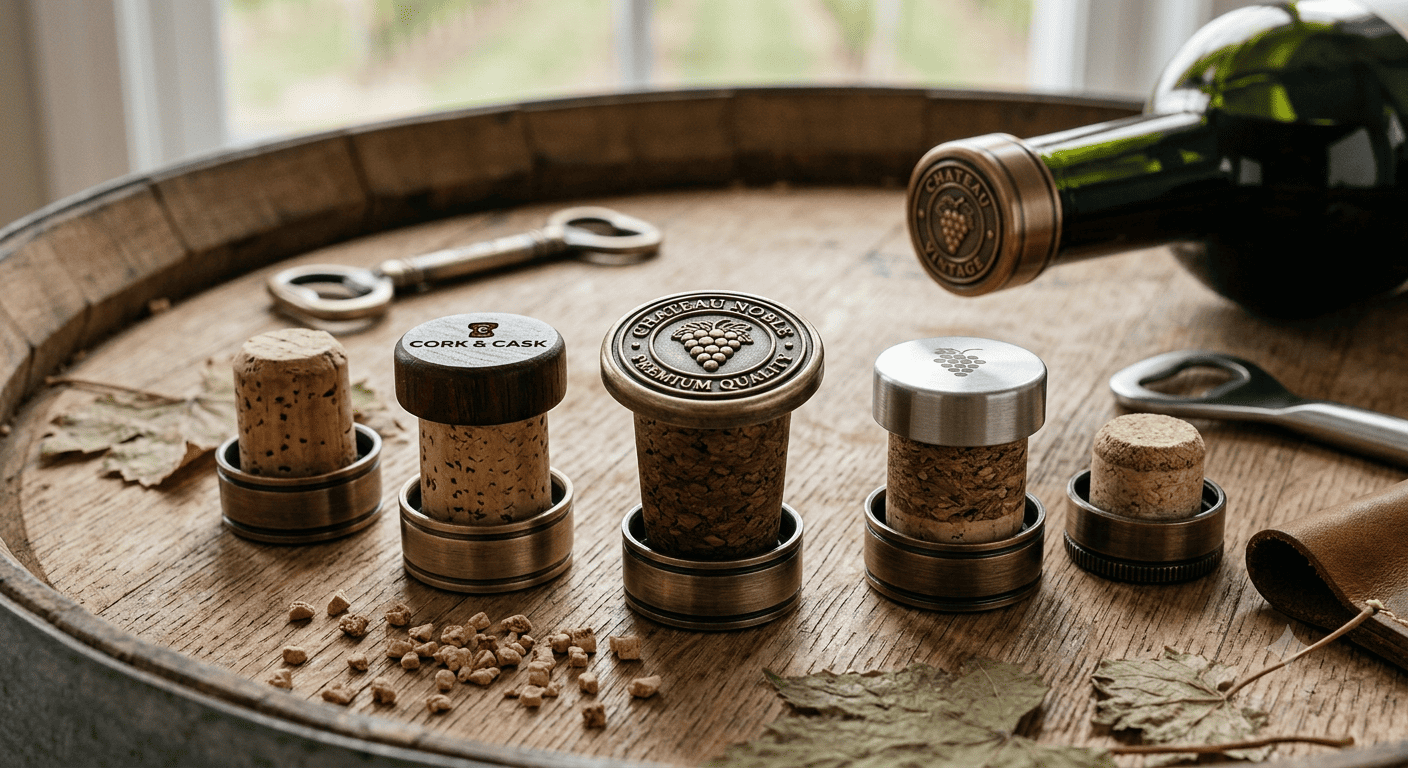
This guide aims to help professionals choose corking wine bottle cap as a reference. For wine buyers, selecting the right cork cap impacts shelf sales, product stability, and brand image. Core considerations in purchasing decisions include cap quality, cost, and sustainability.Considering cork? Our zamac wine cap stopper offers a metal alternative with an airtight seal and custom plating.
Common cap types include cork, synthetic cork, screw cap, and glass stopper.
- Cork is suitable for high-end aged wines but carries risks of mold and oxygen permeation.
- Synthetic cork offers stable costs and no musty odor, but oxygen permeability varies significantly.
- Screw caps are easy to open and suitable for younger wines and export markets.
- Glass stoppers balance aesthetics and sealing but are more expensive. Pay close attention to oxygen permeability (OTR), biocompatibility certification, durability test reports, and batch consistency.
Choosing the right corking wine bottle cap requires a comprehensive consideration of quality, budget, and sustainability goals. There is no one-size-fits-all solution. You need customized options that fit your wine style, brand positioning, and target market. You can balance quality, cost, and sustainability by matching wine cork and cap performance to bottle necks, controlling costs with layered cap details, and using eco-friendly Zamac#3 materials.
Sustainability has become a core standard for global wine brands. Prioritizing recyclable or bio-based materials and communicating production energy consumption and carbon emission data with suppliers can serve as a CSR selling point for the brand. Small-batch trial orders and blind testing (sensory and chemical indicators) effectively reduce the risks associated with switching to new caps.
Choosing wine corks and caps wisely controls costs, shapes the visual design, establishes brand image, and supports the stability and long-term development of the global wine market.
In conclusion, a wine bottle caps sourcing strategy should balance cost and brand positioning: high-end aged wines should prioritize corks or premium glass stoppers, while everyday wines should lean towards screw caps or premium synthetic stoppers. Establishing a long-term cooperative supply chain and conducting regular re-inspections can ensure product quality while reducing total procurement costs and the risk of supply disruptions. Through product testing and rigorous supplier management, wine brands can achieve stable quality and market competitiveness.