Introduction
Zamac — also written Zamak — is a zinc-based alloy combining zinc with small additions of aluminium, magnesium and copper. It has become a standard material for premium perfume caps because it casts cleanly, reproduces fine engraving and gives a cap the solid, weighted feel that buyers associate with a high-end fragrance.
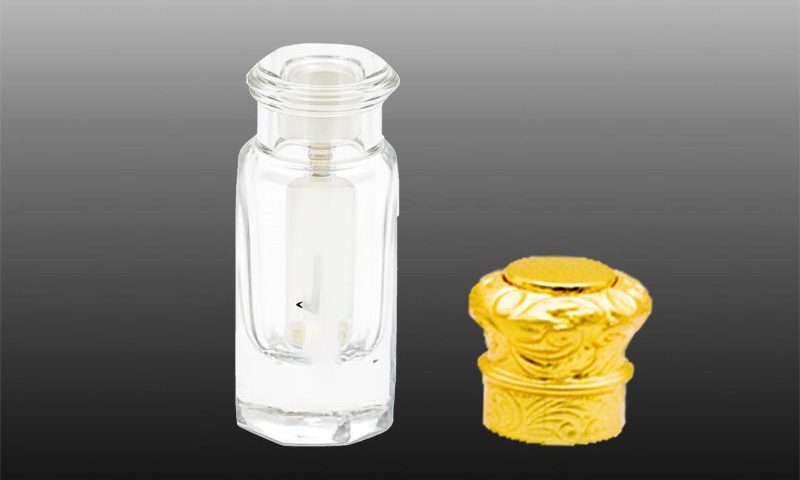
This guide follows the full production route inside a die cast zamac perfume cap factory: design and drawing, first article approval, tool making, hot-chamber die casting, in-process control, machining, surface finishing, assembly and inspection. It is written for brand owners, packaging engineers and purchasing teams who need to evaluate a supplier by the questions worth asking at each stage — not by a price list.
The production of creating zamac perfume caps involves several key stages, each critical to ensuring the final product meets quality standards.
What Is Zamac and Why It Suits Perfume Caps
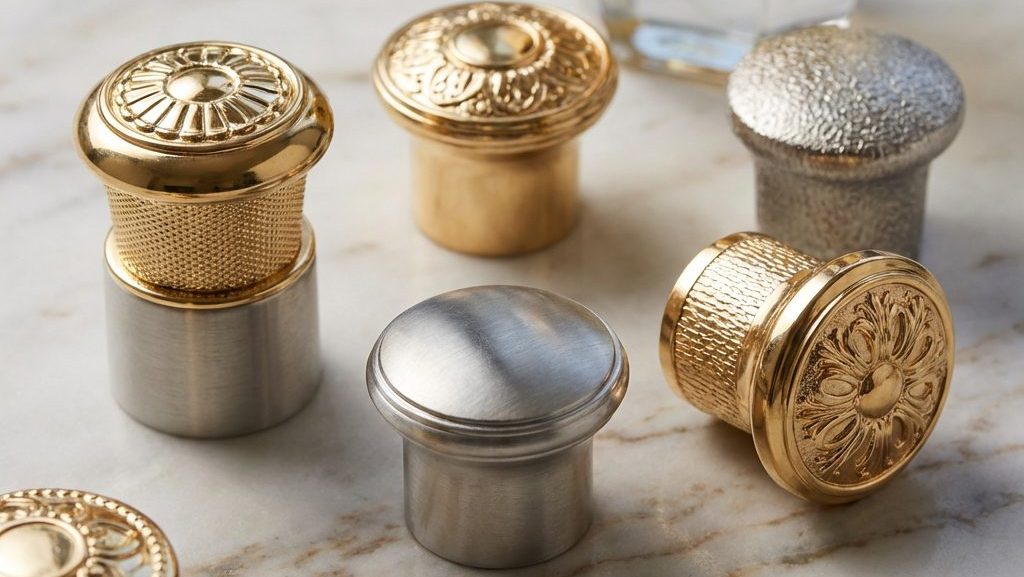
Zamac is valued for a combination that is difficult to match with other materials. Its fluidity when molten lets it fill detailed mould cavities, so petal crowns, fluted edges and embossed logos can be formed in the casting itself rather than added later. Its strength protects the fragrance through packing, shipping and daily handling, and its mass gives the cap a premium hand-feel that plastic caps cannot reproduce.
Design flexibility is the second reason. Because the alloy machines well and accepts a wide range of finishes, the same cap family can be offered in several appearances — polished chrome, brushed metal, matte lacquer or painted brand colour — without changing the underlying part. For buyers comparing perfume caps across materials, the practical choice is usually between a lightweight plastic cap and a metal cap whose weight and finish signal the position of the brand. Our guide to perfume cap materials and their surface treatments compares the options in detail.
Zamac sits in the middle of that range: more premium than plastic, and far more shape-flexible than a machined solid-metal cap. For a side-by-side material comparison, see our guide to perfume cap materials linked in the finishing section.
The Production Route at a Glance
A cap moves through eight stages, and quality is checked at each one rather than only at the end:
1. Design and 3D drawing confirmation 2. Prototyping and first article approval 3. Mould and tool creation 4. Hot-chamber die casting 5. In-process control of temperature, pressure, shot speed and calibration 6. CNC machining, deburring and polishing 7. Surface finishing and decoration 8. Assembly, sealing and final inspection
The order matters. Decisions about the bottle neck interface, parting line and draft allowance are far cheaper to change on a drawing than in hardened steel, so most of the risk is removed before tooling begins.
Step 1 — Design and 3D Drawing Confirmation
The project starts with the cap concept and the bottle it must fit. The design package fixes the neck interface, the parting line, the draft allowance and the depth of any decoration before a tool is cut. Design teams work from clear images, a physical sample where available, and technical files — 2D drawings in PDF or CAD, and 3D models in STP, IGES, ASM or PART format. The more complete that package, the more accurate the quotation and the fewer the revisions later.
Computer-aided design is used to turn the brand’s concept into a precise model that can be checked against the bottle neck before tooling. Light-weighting is considered at this stage where it does not weaken the cap or compromise the feel of the finished part: removing material in the right places reduces unit cost and shipping weight without changing the appearance the customer sees.
Ask a supplier what they need to quote accurately, and treat an unusually low price on an incomplete brief as a signal that revisions will be charged later.
Step 2 — Prototyping and First Article Approval
Once the design is frozen, a prototype or mock-up is produced so the brand can judge the shape and hand-feel in person. Stakeholder feedback at this point is far cheaper to act on than a change requested after tooling is cut.
The approved part then becomes the first article — the physical reference against which the production run is measured. Cap fit, decoration depth and surface appearance are all checked against that reference. A supplier who cannot show you a signed first article and explain how it is stored and used has no stable baseline for consistency.
Step 3 — Mould and Tooling Creation
The mould must reproduce the approved design accurately, and precision at this stage determines the consistency of every cap that follows. Tool making is scheduled against the project timeline agreed at quotation; the exact duration depends on the complexity of the cap and the number of cavities, and is confirmed before work starts rather than promised as a fixed number.
In-house tooling is an advantage worth checking for. When mould design and maintenance happen under the same roof as casting, a worn cavity can be corrected quickly, and design changes do not have to be coordinated across separate workshops. Regular maintenance is what keeps a mould reproducing the same geometry over a long production run.
Step 4 — Hot-Chamber Die Casting
Zamac caps are produced by hot-chamber die casting, not by plastic injection moulding. In this process molten alloy is delivered into a hardened steel die under pressure and held there until it solidifies into the cap shape. The distinction matters: the equipment, temperatures and defect risks are specific to metal die casting, and a supplier who describes the process loosely may not be controlling the variables that actually drive porosity and finish quality.
Modern lines increasingly use vacuum-assisted die casting and high-pressure precision control to reduce internal porosity, surface burrs and dimensional deviation. Cleaner castings mean clearer engraving and a better base for electroplating, because plating amplifies rather than hides surface defects. Buyers evaluating a factory should ask how porosity is controlled and how casting parameters are recorded — our separate guide on minimizing porosity in high-pressure zinc die casting covers that topic in detail.
Step 5 — Process Control: Temperature, Pressure, Shot Speed and Calibration
Precision in die casting comes from controlling a small set of variables consistently, not from inspecting bad parts at the end.
Mould and tool design. The die is engineered around the specific cap: cavity layout, gating, venting and cooling all affect whether the alloy fills evenly and detail is reproduced sharply. Experienced die designers adjust the geometry to the design rather than forcing a design into a standard tool.
Temperature control. The viscosity, flow behaviour and solidification of molten zamac are sensitive to temperature. Holding the shot chamber and die cavity within a controlled band keeps metal flow consistent from cycle to cycle, which is what makes cap dimensions and surface finish repeatable.
Pressure control. Shot pressure determines how completely the cavity fills and how dense the casting is. Unstable pressure shows up as thickness variation and inconsistent surface appearance, so it is monitored and adjusted through the cycle rather than set once at start-up.
Shot speed and timing. The rate at which metal enters the die affects fill time, part density and finish. Shot speed and timing are tuned together to avoid trapped air, weld lines and shrinkage while keeping cycle time economical.
Calibration and maintenance. Die casting machines, dies and auxiliary equipment are calibrated on a defined schedule. Well-maintained equipment holds tolerances to the approved first article and reduces unplanned downtime. Dimensional tolerance itself is agreed against the approved drawing and verified on the first article, then monitored in production — a supplier who quotes an exact tolerance without seeing the drawing is quoting a number, not a capability.
Step 6 — CNC Machining, Deburring and Polishing
After casting, caps pass through CNC turning to bring critical dimensions into line and remove excess material from the casting. This is what makes the cap fit consistently on the bottle neck, cycle after cycle.
Deburring then removes the small edges left by machining and casting, and polishing prepares the surface for finishing. These steps are labour-sensitive and easy to rush; a cap that looks acceptable before plating can still show every preparation defect once a reflective finish is applied. Consistent polishing is therefore a prerequisite for a premium appearance, not a cosmetic extra.
Step 7 — Surface Finishing and Decoration
Surface finishing is where the cap takes on its brand identity. Common options include:
– Electroplating in silver, gold, rose gold and other tones, in matte or glossy finishes – Painting and powder coating for brand-specific colours – Sandblasting and textured finishes for a tactile, distinctive surface – Laser engraving, embossing and printing for logos and artwork
Finishing processes are also evolving. Water-based coatings and nickel-free plating systems are increasingly offered alongside conventional electroplating, reducing problematic residues while preserving colour stability and appearance. A supplier should be able to explain which finishes suit the intended market and compliance requirements, rather than claiming a single coating works everywhere.
For a deeper discussion of how coating choice affects corrosion resistance, see our surface-coating guide.
Step 8 — Assembly, Sealing and Long-Term Durability
Where a cap includes a liner or sealing ring, assembly is a controlled step rather than a final afterthought. The seal blocks leakage, limits air and moisture exchange and protects the aroma and shelf life of the contents. Improved matching between cap and neck, combined with appropriate corrosion-resistant treatment, is what keeps a cap sealing reliably through storage and international shipping, where temperature and humidity vary.
Durability is therefore a system property: the casting must be sound, the dimensions stable, the coating adherent and the seal correctly fitted. A weakness in any one of these will show up as a field complaint rather than a factory defect.
Quality Control Across the Production Line
Effective quality control begins with incoming material and follows the cap through every stage: alloy selection, casting parameters, trimming and CNC operations, surface preparation, plating and final assembly. Recording measurements at each step means a deviation can be traced back to the operation that produced it.
Typical checks include:
– Bottle neck fitting and pull tests to confirm the cap stays seated – Dimensional accuracy checks against the first article – Surface finish inspection before and after coating – Salt spray testing for corrosion resistance, to an agreed test window and acceptance standard – Adhesion and abrasion tests for coating durability
Statistical process control is used to watch key parameters and flag drift before it produces defective parts. Automation of temperature, pressure and timing reduces the variation that manual adjustment introduces, while trained operators remain responsible for monitoring, interpretation and correction. Consistent results come from that combination of controlled equipment and skilled people, supported by close cooperation with alloy and tooling suppliers.
Independent third-party inspection can be arranged where a buyer requires it; the scope and standard are agreed before production rather than assumed. What matters is that records exist and can be reviewed — a supplier who can show the measurement history for a run is offering more than a visual check.
Customization and Working With a Supplier
Customization usually covers shape, colour, finish and logo treatment. Minimum order quantities and lead times depend on whether the project uses an existing mould or a new tool, and should be confirmed in writing against the approved design.
A supplier with in-house design, tooling, casting and finishing capability removes the coordination risk of moving a project between separate workshops. Shorter lead times and more consistent quality follow from that control. When evaluating a factory, check whether each stage is performed on site, and ask to see the first article and the inspection records for a comparable cap.
For the full range of cap shapes and finishes, see our zamac perfume cap category.
Sustainability and Process Trends
Two shifts are shaping cap production. The first is environmental: water-based coatings, reduced-emission plating and more efficient use of alloy are replacing older finishes where they meet the same performance requirement. The second is consistency: better casting control and in-process measurement are reducing scrap and rework, which lowers cost and waste at the same time.
Buyers increasingly expect both, and the strongest suppliers treat them as part of the same engineering problem rather than as separate claims.
Conclusion
A premium zamac cap is the result of a controlled sequence — design, first article, tooling, die casting, process control, machining, finishing, assembly and inspection — with quality checked at every stage. Understanding that sequence lets you judge a supplier on how each step is managed, rather than on how the finished sample looks in a showroom.
To discuss a cap project, share your bottle specification and design files and request a quotation through our contact page.